 Skip to content




Unboxing Experience: How to Design Packaging That Customers Share on Social Media
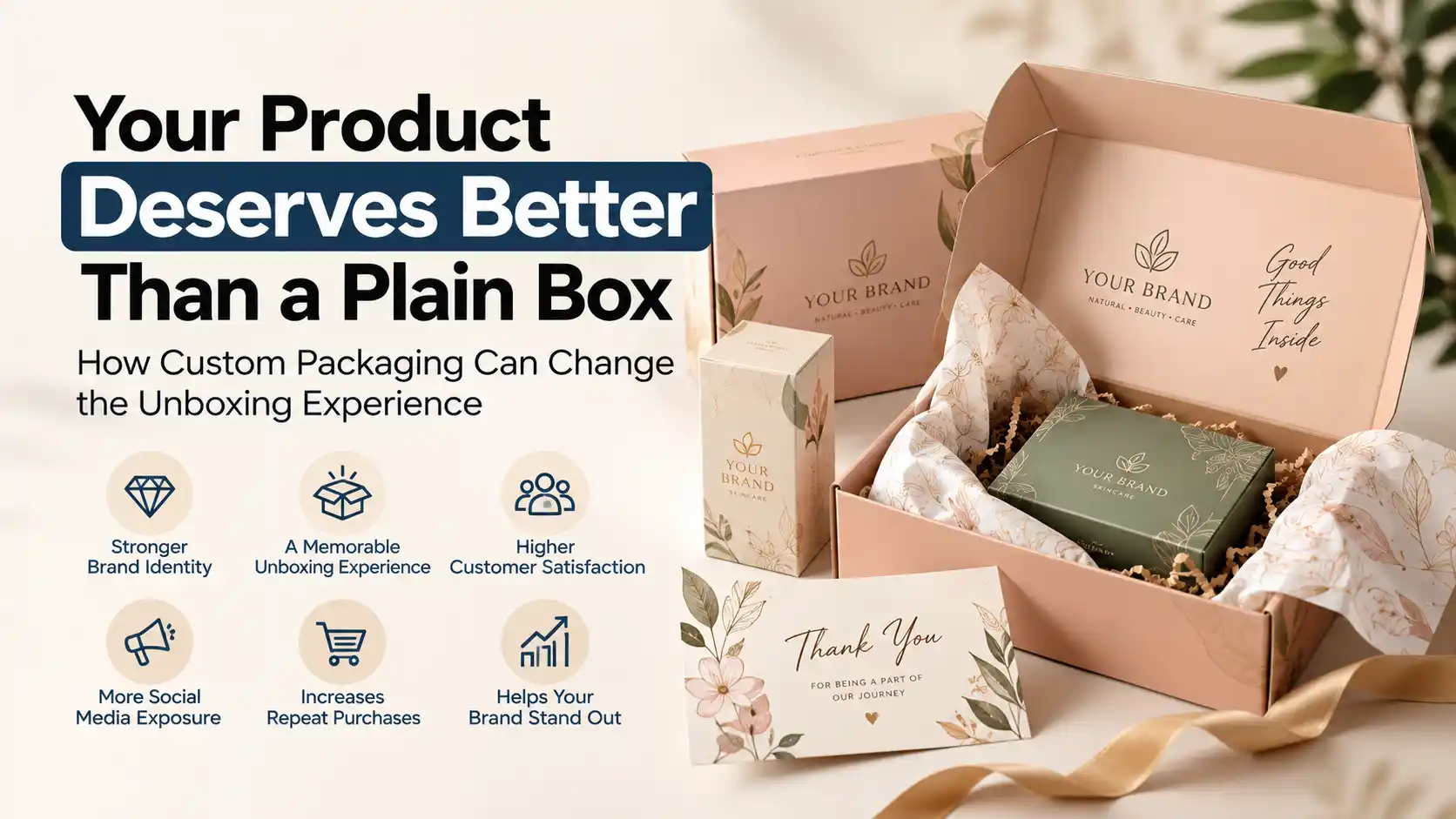
The packaging that gets shared on social media has five specific elements — and most brands are using zero of them. Inside printing. Layered tissue wrap with a sticker seal. A branded insert card. A distinctive exterior design. And structural quality that communicates the brand’s care before the box is even opened. Get all five right and your customers will create marketing content for you every time they receive an order. Get none of them right and your packaging is invisible — functional but forgettable.
The unboxing video and the haul photograph are not social media formats that brands can force. They are behaviors that customers engage in voluntarily when the experience justifies it. No amount of incentive replaces the genuine delight of receiving something that was worth sharing. The design of your packaging either creates that delight or it does not — and the specific elements that create it are knowable, designable, and accessible at price points that every brand at every scale can afford.
Why Unboxing Experience Content Has Become a Primary Purchase Driver
Social proof has always influenced purchase decisions. What has changed in 2026 is the format through which social proof is delivered. Peer video content — unboxing videos, haul reviews, first impressions filmed in customers’ own homes — is among the most trusted and persuasive content format in existence because it cannot be staged by the brand.
When a customer films themselves opening a package and sharing their genuine reaction, their audience receives a brand impression that no advertisement can replicate. The trust is implicit. The audience knows the person sharing has no commercial relationship with the brand. The recommendation is authentic. And the packaging that created the shareable moment is doing more marketing work in that 30-second video than most brands’ entire paid social budgets achieve in a week.
Research on packaging and social sharing shows consistently that 42% of consumers are more likely to share a product on social media when it arrives in premium or distinctive packaging. For brands at every scale, this statistic represents an accessible marketing opportunity — one that requires packaging investment rather than advertising spend.
The Five Elements of Shareable Unboxing Experience
Element 1 — Inside Printing (Most Important)
Inside printing is the single packaging element most consistently cited as the trigger for social sharing. When a customer opens a box and encounters full-color brand design on the interior surfaces — a message, a design, a quote, an illustration — the experience of opening is transformed from a functional action into a brand moment.
Inside printing works specifically because it is unexpected. The customer has seen the outside of the box. They formed their first impression from the exterior. When they open the box and find a deliberate, designed interior surface, they encounter something they did not expect — and unexpected delight is the most reliable social sharing trigger in existence.
Inside printing can carry:
– A brand welcome message or founder note
– A seasonal or collection-specific message
– A brand illustration or pattern that extends the brand identity to the interior
– Care instructions or product usage tips
– QR codes linking to brand content or loyalty programs
– Social sharing prompts — “Share your unboxing @brandname”
Element 2 — Layered Tissue with Sticker Seal
Tissue paper creates a physical object that the customer must interact with before reaching the product. The act of unwrapping — lifting the tissue, peeling the sticker seal — creates a sequence that takes more time than simply lifting a product out of a box. This added time creates anticipation. Anticipation creates emotional investment. Emotional investment creates the kind of genuine reaction that reads as authentic on camera.
The sticker seal specifically creates a moment of ceremony — the conscious act of breaking a seal to access the product inside. It is a small thing that consistently makes customers feel that the brand treated the packaging of their order as an occasion worth sealing.
Element 3 — Branded Insert Card
The insert card is the moment of personal connection in the unboxing sequence. After the tissue is unwrapped and the product is revealed, a branded card — a handwritten-style thank you note, a founder story, a product care guide, a loyalty program invitation — creates the sense that a real person thought about this specific order.
Customers who feel seen by a brand at the moment of receiving their order are significantly more likely to share the experience and to return. The insert card costs pennies and creates the most powerful single emotional moment in the unboxing sequence.
Element 4 — Distinctive Exterior Design
The exterior of the packaging creates the first impression — on the customer opening it, on anyone who sees them opening it, and on anyone who sees the footage of the opening on social media. A distinctive exterior design that is immediately recognizable and photographically striking is the foundation that the rest of the unboxing sequence builds on.
Distinctive exterior design does not mean complex. Some of the most shareable packaging in 2026 uses a single bold color with a large brand mark — simple, confident, and impossible to ignore. The distinctiveness comes from commitment to a clear visual identity, not from decorative complexity.
Element 5 — Structural Quality That Communicates Care
The weight of the box when it is picked up. The precision of the closure. The clean corners and aligned edges. These structural qualities communicate something about the brand before the box is opened — and that pre-opening impression shapes everything that follows.
A box that feels solid and precise communicates a brand that takes quality seriously. A box that flexes, warps, or closes imprecisely communicates a brand that made cost-saving decisions that affected the customer experience. The structural quality of packaging is perceived before any design element is processed.
How to Implement These Elements Without Exceeding Your Budget
The total cost of implementing all five unboxing elements — inside printing, tissue with sticker seal, insert card, distinctive exterior design, and quality construction — is lower than most brands expect.
Starting with the highest-impact, lowest-cost elements:
Tissue paper and sticker seal: under $0.50 per order at modest volumes. The layered unwrapping experience for less than the cost of a postage stamp.
Branded insert card: under $0.10 per unit at reasonable quantities. The personal connection moment for pennies.
These two elements together cost under $0.60 per order and create two of the five shareable unboxing elements immediately — today, with your existing boxes.
Adding the remaining elements as volume grows:
Inside printing at the next box reorder. The marginal cost of inside printing relative to outside-only printing is modest, and the impact on social sharing rate is the highest of any single packaging element.
Upgraded exterior design at the next brand refresh. Your current logo does not need to change. The packaging design built around it can be significantly upgraded without brand identity disruption.
FAQs — Unboxing Experience Packaging
What is the most important element for creating shareable unboxing packaging?
Inside printing is consistently the element most cited as the trigger for social sharing. When customers open a box and encounter a designed interior surface, the unexpected discovery creates the genuine delight that drives sharing. It is also the element that most brands are not currently using — creating differentiation at modest cost.
How much does it cost to add inside printing to packaging?
The cost of inside printing relative to outside-only printing varies by format and quantity but is typically a modest per-unit addition. Contact Packaging Island for accurate pricing on inside printing for your specific packaging format.
Do tissue paper and sticker seals really make a difference to social sharing?
Yes. The layered unwrapping experience that tissue and sticker seals create increases both the time spent on the unboxing interaction and the emotional investment in the reveal moment — both of which drive sharing behavior.
