 Skip to content


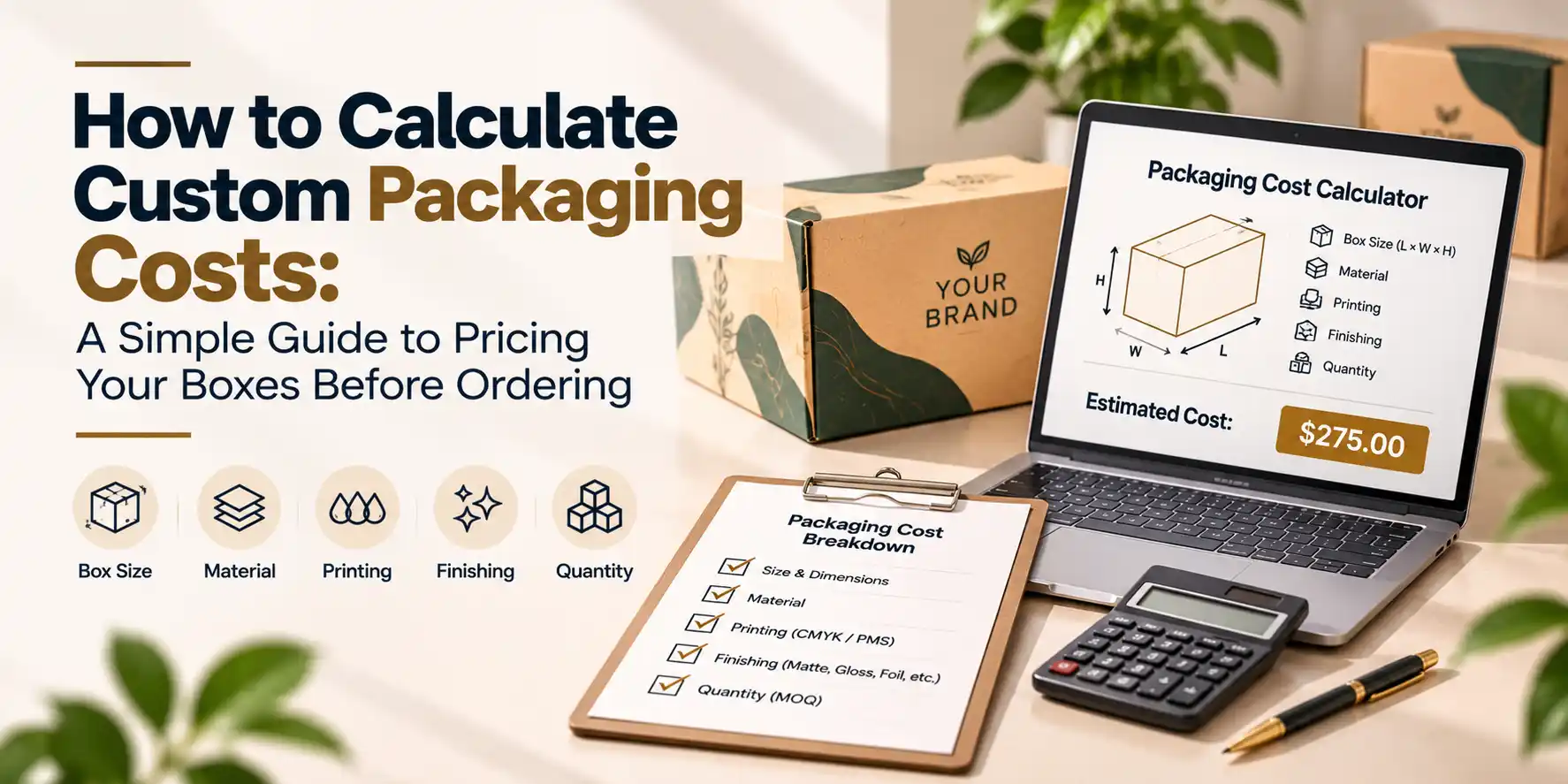


How to Calculate Custom Packaging Costs:
The real cost of a custom box is not the unit price on the quote. It is the total landed cost per box: the box price plus tooling and setup, inserts, shipping, duties and taxes, storage, and the extra cost of packing each order. Divide that total by the number of boxes you will actually use, and you get a number you can compare across suppliers and build into your product pricing.
This guide shows you how to calculate it before you order, what to ask for in a quote, and how to work out whether a box fits your margins.
Key Takeaways
- Compare landed cost per box, not the headline unit price.
- Five factors set most of the price: style, size, material, print and finishes, and quantity.
- One-time costs (tooling, samples, setup) should be spread across the run, not ignored.
- Packaging should be tested against your margin: calculate it as a share of your product’s selling price.
- A detailed quote with the same specifications from each supplier is the only fair way to compare.
What Drives Custom Packaging Cost
Every quote is built from the same ingredients. Knowing them helps you see why two quotes for “a box” can be far apart.
| Cost factor | What it means | How it moves the price |
|---|---|---|
| Box style | Mailer, rigid, folding carton, corrugated | More complex structures need more labor and assembly |
| Size | Dimensions of the box | Larger boxes use more board |
| Material | Board type, thickness, and strength | Heavier or specialty board costs more |
| Printing | Method, number of colors, and coverage | More colors and full coverage raise cost |
| Finishes | Lamination, foil, embossing, spot effects | Each extra finish adds a step |
| Inserts | Paperboard, molded pulp, foam, custom cutting | Custom-cut inserts add tooling and material |
| Quantity | Number of units in the run | Setup cost is spread across more boxes at higher quantity |
| Shipping | Freight method, distance, and speed | Heavier, bulkier, and faster shipping costs more |
The Costs People Forget
Many first-time buyers compare only the unit price. These items can change the picture.
One-time costs
- Tooling: cutting dies, plates, or molds for your box and insert.
- Samples and prototypes: physical or digital samples before the full run.
- Artwork preparation: if your files need adjustment or you need design support.
Per-order costs
- Freight and delivery: sea, air, or courier, plus any local delivery.
- Duties, taxes, and customs fees: these depend on where the boxes ship from and where they arrive, so confirm them for your destination.
- Payment and currency costs: bank transfer or card fees, and exchange rates if you pay in another currency.
Ongoing costs
- Storage: space, shelving, and conditions for the boxes.
- Packing labor: time to assemble boxes, insert products, and add cards or tissue.
- Waste and damage: boxes lost to spoilage, mistakes, or crushed stock.
- Shipping impact: the effect of box size and weight on every outbound parcel.
The Formula: Landed Cost Per Box
Use this to compare quotes fairly:
Landed cost per box = (box price × quantity + one-time costs + freight + duties and taxes + other order fees) ÷ usable boxes
Then add the ongoing costs per order if you want a full cost to pack:
Cost to pack per order = landed cost per box + insert cost + packing labor + extras (tissue, card, sticker)
Usable boxes means the quantity you will actually ship, after removing samples, photo boxes, and expected damage. If you order 1,000 boxes and expect to use 950, divide by 950, not 1,000.
Worked Example (Illustrative Numbers)
A skincare brand is quoting a printed mailer box. All numbers below are examples only, not prices from any supplier.
| Item | Amount |
|---|---|
| Box unit price | $1.20 |
| Quantity ordered | 1,000 |
| Box subtotal | $1,200 |
| One-time tooling and setup | $150 |
| Freight | $180 |
| Duties and taxes | $90 |
| Payment and currency fees | $30 |
| Total order cost | $1,650 |
| Usable boxes (after about 5% for samples and damage) | 950 |
| Landed cost per usable box | about $1.74 |
The headline unit price was $1.20, but the real cost per usable box is about $1.74, roughly 45% higher.
Now add per-order packing costs:
| Item | Amount |
|---|---|
| Landed box cost | $1.74 |
| Paperboard insert | $0.25 |
| Tissue and sticker seal | $0.15 |
| Thank-you card | $0.10 |
| Packing labor (about 1 minute at $12/hour) | $0.20 |
| Cost to pack per order | about $2.44 |
If the product sells for $30, packaging is about 8% of the price. That is a number you can judge against your margin.
Check Packaging Against Your Margin
Once you know your cost to pack, test it.
Packaging share of price = cost to pack ÷ product selling price
Then ask:
- Does your gross margin still work after packaging?
- Is the packaging cost in proportion to what customers see and value?
- Could a simpler structure or finish lower cost without hurting the brand?
- Can you pass part of the cost to customers through pricing or a premium bundle?
There is no universal “right” percentage. Premium and gift products can carry higher packaging costs, because the box is part of the value. Low-margin, high-volume products often need leaner packaging. What matters is that you know the number and chose it on purpose.
How to Get Quotes You Can Actually Compare
A quote is only useful if every supplier prices the same thing. Send the same specification sheet to each one.
Include in your request:
- Box style and internal dimensions (length × width × height)
- Material and board strength
- Print method, colors, and coverage (outside and inside)
- Finishes
- Insert type and material
- Quantity tiers you want priced (for example, three different quantities)
- Delivery address and preferred shipping method
- Required lead time
Ask each supplier to state clearly:
- Whether tooling, plates, and samples are included or charged separately
- Freight, duties, and taxes: included, or extra?
- Payment terms and accepted methods
- Production and shipping lead times
- Artwork support and file requirements
- What happens if there is a defect or a color mismatch
Put the answers in a simple comparison sheet with landed cost per usable box in the last column.
How to request a packaging quote → quote guide
Ways to Lower Cost Without Hurting Quality
- Simplify the structure. Standard styles usually cost less than complex ones.
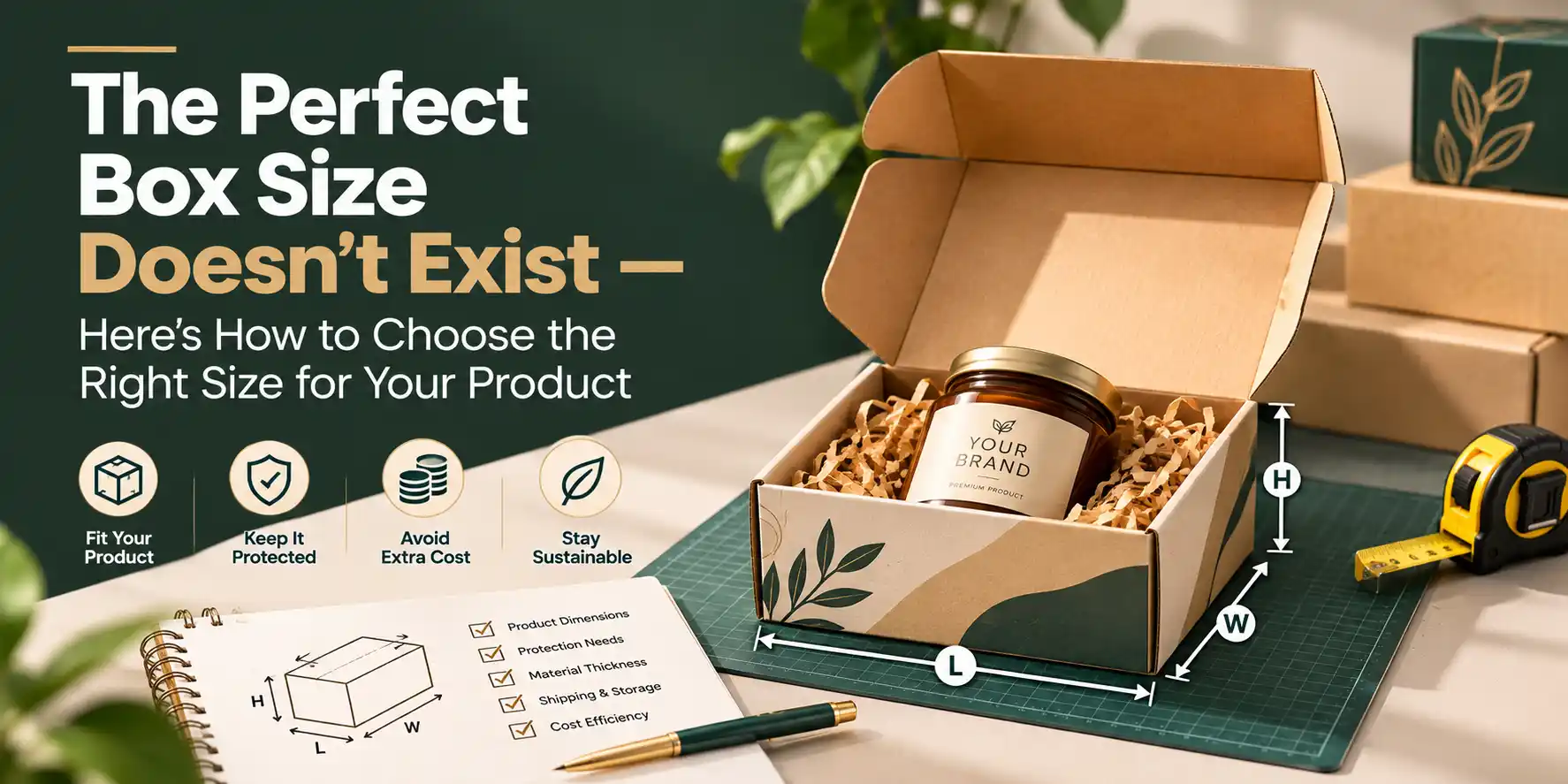
- Right-size the box. Less board and a smaller shipping footprint can lower both box and freight cost. [INTERNAL-LINK: how to choose box size → “How to Choose the Right Box Size” post]
- Limit colors and finishes. One strong print detail often beats many effects.
- Choose strength that fits the product. Do not pay for heavier board than your weight and route require.
- Use a simpler insert. Paperboard often costs less than custom-cut foam, where protection allows.
- Choose a sensible quantity. Compare quote tiers, but do not overbuy. [INTERNAL-LINK: custom box MOQ guide → “Custom Box MOQ Explained” post]
- Plan freight early. Rushing a delivery usually costs more than planning ahead.
- Send clean artwork. Reprints and file fixes are avoidable costs. artwork guidelines.
Common Costing Mistakes
- Comparing only unit prices. One supplier’s low price may exclude tooling, freight, or taxes.
- Forgetting duties and taxes. These can change the final cost, so confirm them for your destination.
- Ignoring currency and payment fees. Small percentages add up on larger orders.
- Dividing by the full quantity. Divide by usable boxes.
- Leaving out packing labor. Your time has a cost, even if you do it yourself.
- Not testing margin. A box that looks great but breaks your margin is not sustainable.
- Pricing from a rough spec. Different assumptions give different quotes, so use one spec sheet for all.
- Skipping the sample. A wrong-size or weak box costs more than the sample would have.
Quick Costing Checklist
- One clear specification sheet prepared
- Quotes requested at two or three quantity tiers
- Tooling, samples, and setup costs confirmed
- Freight, duties, and taxes confirmed for your destination
- Payment and currency fees included
- Landed cost per usable box calculated for each supplier
- Insert, extras, and packing labor added to get cost to pack
- Packaging share of product price checked against your margin
- Lead time confirmed and reorder date planned
Frequently Asked Questions
How much do custom boxes cost?
It depends on box style, size, material, printing, finishes, inserts, and quantity, so there is no single price. The most reliable way to find out is to request quotes for your exact specification at several quantity tiers.
What is landed cost?
Landed cost is the total cost to get an item to your door. For boxes, that means the box price plus tooling and setup, freight, duties and taxes, and other order fees, divided by the number of usable boxes.
Why are custom boxes more expensive at low quantities?
Setup costs such as printing preparation and cutting tools are the same regardless of run size. At low quantities those costs are shared across fewer boxes, so each box carries more of them.
What should I ask for in a custom packaging quote?
Ask for the unit price at several quantities, whether tooling, samples, and artwork support are included, what freight, duties, and taxes are extra, payment terms, and production and shipping lead times.
What percentage of my product price should packaging be?
There is no fixed rule. Premium and gift products can justify a higher share because packaging is part of the value. Lower-margin products usually need leaner packaging. Calculate your own share and check it against your margin.
Are samples free?
Policies vary by supplier. Some charge for samples, some credit the cost against a later order. Ask before you request one.
Can I lower cost by changing the box size?
Often yes. A smaller box uses less material and can reduce freight. Always keep enough space for the product and insert, and confirm fit with a sample.
How to order custom packaging step by step.
Conclusion
Pricing your packaging before you order is a short exercise, and it protects your margin.
- Compare landed cost per usable box, not the headline price.
- Include tooling, freight, duties, and fees.
- Add insert, extras, and packing labor to find your cost to pack.
- Check the result against your product price and margin.
- Request quotes from the same spec sheet, at several quantities.
Want a clear, itemized quote? Send us your product details, box style, and quantity. We’ll give you a breakdown you can compare and plan around.
