 Skip to content

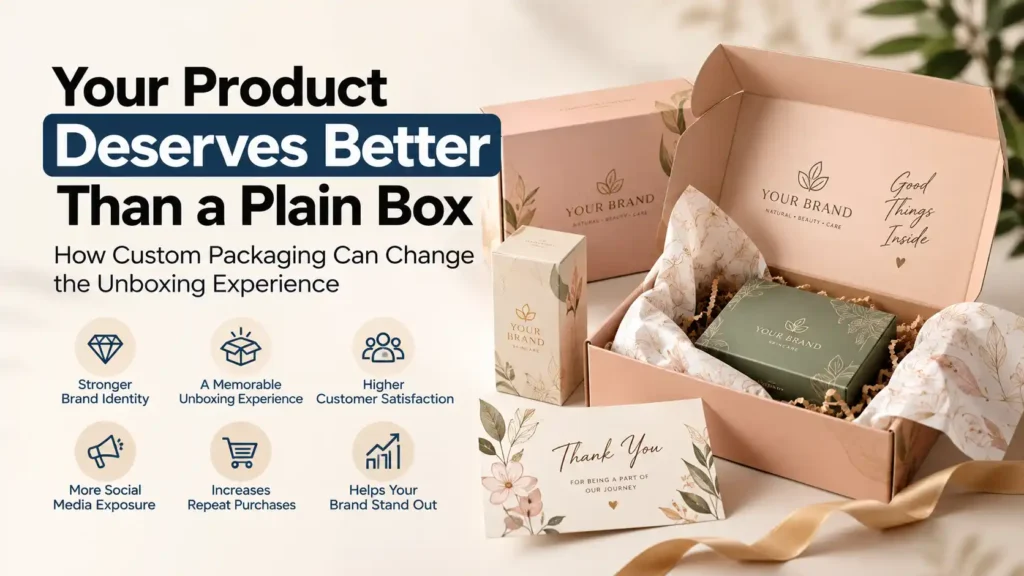
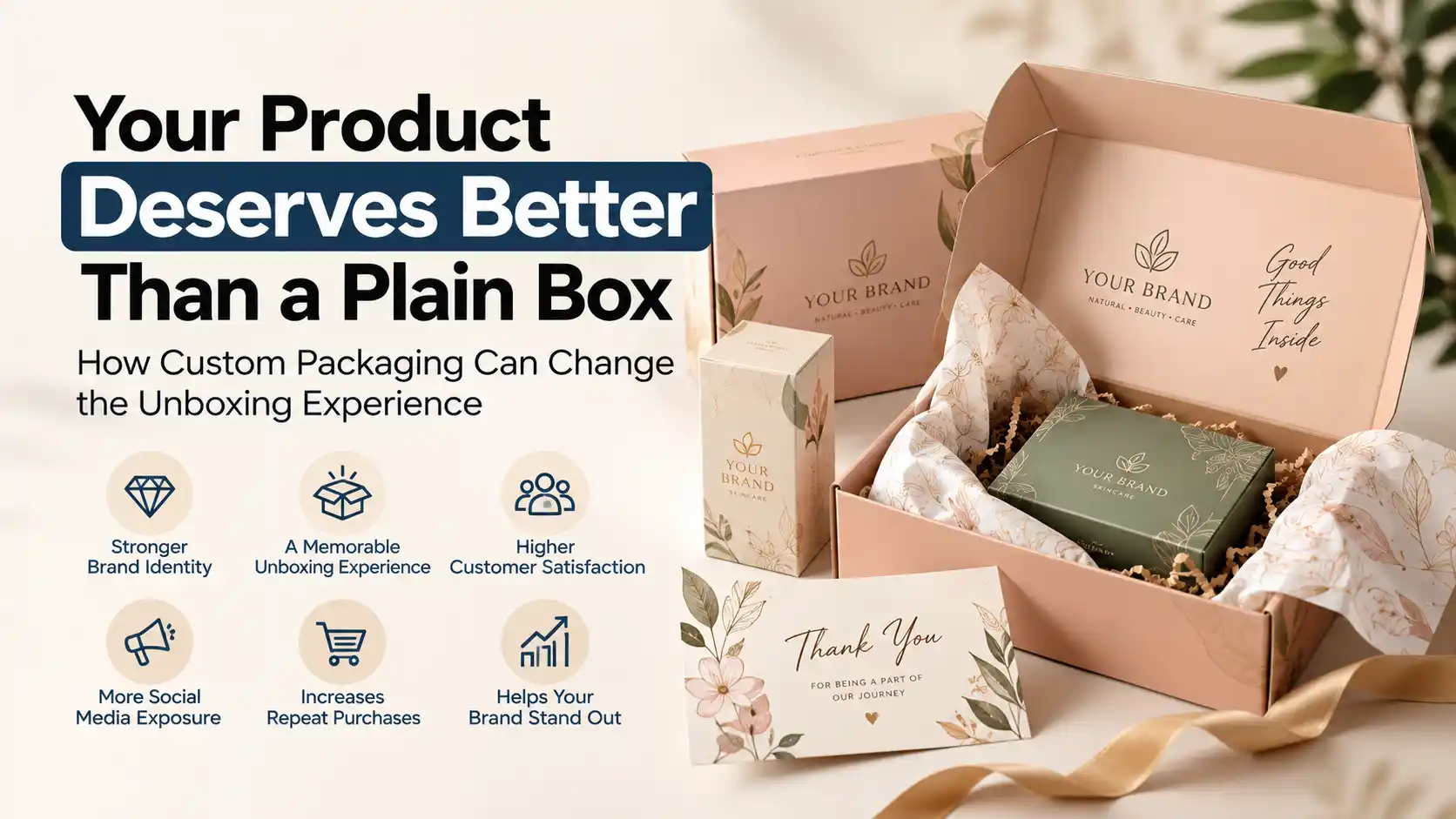


Your Product Deserves Better Than a Plain Box: How Custom Packaging Can Change the Unboxing Experience
A plain brown box gets your product from A to B. It does nothing else. Unboxing is the only moment in the whole buying journey when your customer is physically holding your brand, and a blank carton wastes it.
Custom packaging fixes that. It turns delivery from a logistics step into the first real conversation between your brand and your customer.
Key Takeaways
- Unboxing is a brand moment you control completely, and a generic box leaves it blank.
- Most shoppers are satisfied with packaging that simply works, so the opportunity is in being memorable, not just adequate.
- Small touches (printed inserts, tissue, a thank-you card) often do more than expensive structural upgrades.
- Sustainable materials help, but reward and surprise drive repeat purchases more strongly than eco-claims alone.
- Start with the layer the customer touches first: the mailer or outer box.
What Is the Unboxing Experience, and Why Does It Matter?
The unboxing experience is everything a customer sees, touches and feels from the moment a parcel arrives until the product is in their hands. That includes the outer box, the opening mechanism, the inner layers, the product presentation and anything extra you add.
It matters because it’s the first physical proof of the promise you made online. Your website photos, your pricing and your brand story all arrive in one cardboard moment. If the box feels cheap, the product inherits that impression before it’s even been used.
For small and growing brands this is a real advantage. You can’t outspend large retailers on ads, but you can match them at the doorstep.
Plain Packaging vs. Custom Packaging: What Actually Changes
Here is what shifts when you move from a stock box to a branded one.
Recognition. Your logo, colors and pattern appear on the doorstep, on a shelf and in the photos customers share. A plain box can’t be recognized, remembered or posted.
Perceived value. Customers judge price and quality partly by presentation. A well-fitted box with a clean print finish makes a $40 product feel like it belongs at $40.
Protection. Custom sizing removes the empty space that lets products slide and break. A box made for your product protects it better than a standard size ever will. Fewer damaged orders means fewer refunds and fewer unhappy reviews.
Shareability. People film and photograph good unboxings. Plain boxes don’t get posted. This is free marketing your packaging either earns or doesn’t.
What the Data Says About Unboxing and Repeat Purchases
Surveys on this topic are useful, but some of the findings are less obvious than the usual claims.
In Macfarlane Packaging’s 2025 unboxing survey, 80% of respondents said they were satisfied or very satisfied with their unboxing experience. This matters: most customers already expect packaging that works. Being “fine” doesn’t set you apart. Being memorable does. webtonic
The same survey found that 52% said recycling labels were unclear. Clear, honest on-pack disposal instructions are a cheap way to stand out. webtonic
Ryder’s 2025 U.S. consumer study asked what in the unboxing experience would make shoppers buy from the same brand again. Coupons or credits led at 47%, followed by free samples at 24% and sustainable packaging at 16%. Ryder’s results also noted that consumers look for premium unboxing touches such as custom designed boxes, colorful filler material and exterior details like ribbons or twine. webtonicpackagingdive
What this means for you: sustainable materials are worth using, but a reward inside the box moves repeat purchases more than an eco-claim on the outside. The strongest unboxing experiences combine both.
The Layers of a Great Unboxing Experience
Think of the experience as layers. You don’t need to upgrade all of them at once.
1. The Outer Box or Mailer
This is the first impression. A printed mailer with your logo, a color that matches your brand, or a simple pattern is enough to make the parcel feel intentional. If you only invest in one layer, make it this one.
2. The Inside Print
Printing inside the lid is one of the cheapest ways to create surprise. Customers don’t expect it, so it feels like a gift. A short line, a pattern, or a thank-you message works.
3. Protective and Presentation Inserts
Custom inserts hold the product in place and present it like it matters. For jewelry, cosmetics, candles and electronics, an insert is the difference between “arrived safely” and “feels premium.”
4. Tissue, Stickers and Seals
Branded tissue paper or a sticker seal costs little and adds a ritual to opening. It slows the customer down in the best way.
5. The Extras
A thank-you card, a care guide, a discount code for the next order or a small sample. Based on the Ryder data above, this layer has the most direct link to repeat orders.
Design Choices That Make or Break the Experience
Keep the brand consistent. Your box should look like it belongs to your website, your social profiles and your product. If your site is minimal and your box is busy, customers feel the mismatch.
Choose finishes on purpose. Matte feels modern and quiet. Gloss feels bright and energetic. Soft-touch coatings feel premium. Foil or spot UV can highlight one detail, such as a logo. Use one or two finishes, not all of them.
Mind the opening. If the box is hard to open, the experience is frustrating, not exciting. Easy-tear strips and tuck closures should feel good in the hand.
Design for the photo. Ask yourself whether the box would look good on a kitchen table or in a short video. If yes, you’re designing for sharing.
Get your files print-ready. Many good designs fail at the printing stage because of wrong dielines, low-resolution artwork or RGB colors that print differently than they appear on screen. Using a correct dieline, CMYK color and proper bleed prevents expensive reprints.
Custom Packaging on a Budget
You don’t need a large order or a luxury finish to start.
- Start with one SKU. Pick your best-selling product and upgrade that box first.
- Use one-color printing. A single-ink logo on kraft board looks clean and is cost-effective.
- Invest in inside print or a sticker before upgrading structure.
- Add a card with a reorder incentive.
- Test and measure. Watch customer photos, review comments and repeat-order rates after the change.
Common Mistakes to Avoid
- Oversizing the box. Too much empty space looks wasteful and raises damage risk.
- Too many finishes. More effects don’t mean more premium.
- Ignoring the brand voice. A playful brand shouldn’t ship in a serious corporate box, and the reverse.
- Skipping samples. Always check a physical sample before a full run, since colors and fit look different in person.
- Forgetting the product itself. Packaging should support the product, not compete with it.
Frequently Asked Questions
What is custom packaging?
Custom packaging is packaging made to your product’s size and printed with your branding, such as your logo, colors and message. It can include boxes, mailers, inserts, sleeves and labels.
Does the unboxing experience really affect sales?
It affects the next sale more than the first one. The first purchase is driven by your listing and price. Repeat purchases and word of mouth are influenced by how the product arrives and how it feels to open.
Is custom packaging expensive for a small business?
It doesn’t have to be. Starting with a printed mailer, one-color print or an inside-lid design costs far less than a full premium setup. Upgrade the layers customers notice most, then expand as you grow.
What should I upgrade first?
The outer box or mailer, since it’s the first thing the customer sees. Then add inside print and an insert.
What file format do I need for printing?
Printers generally need a dieline-matched file with CMYK colors, bleed and high-resolution artwork, often in PDF or AI format. Confirm exact specs with your printer before you submit.
Conclusion: Make the Box Part of the Brand
A plain box protects your product. A custom box introduces it. You don’t need to change everything at once: start with the outer layer, add one surprise inside, and include a reason for the customer to come back.
Ready to design packaging that matches your product?
