 Skip to content





What Box Should I Use for My Product?
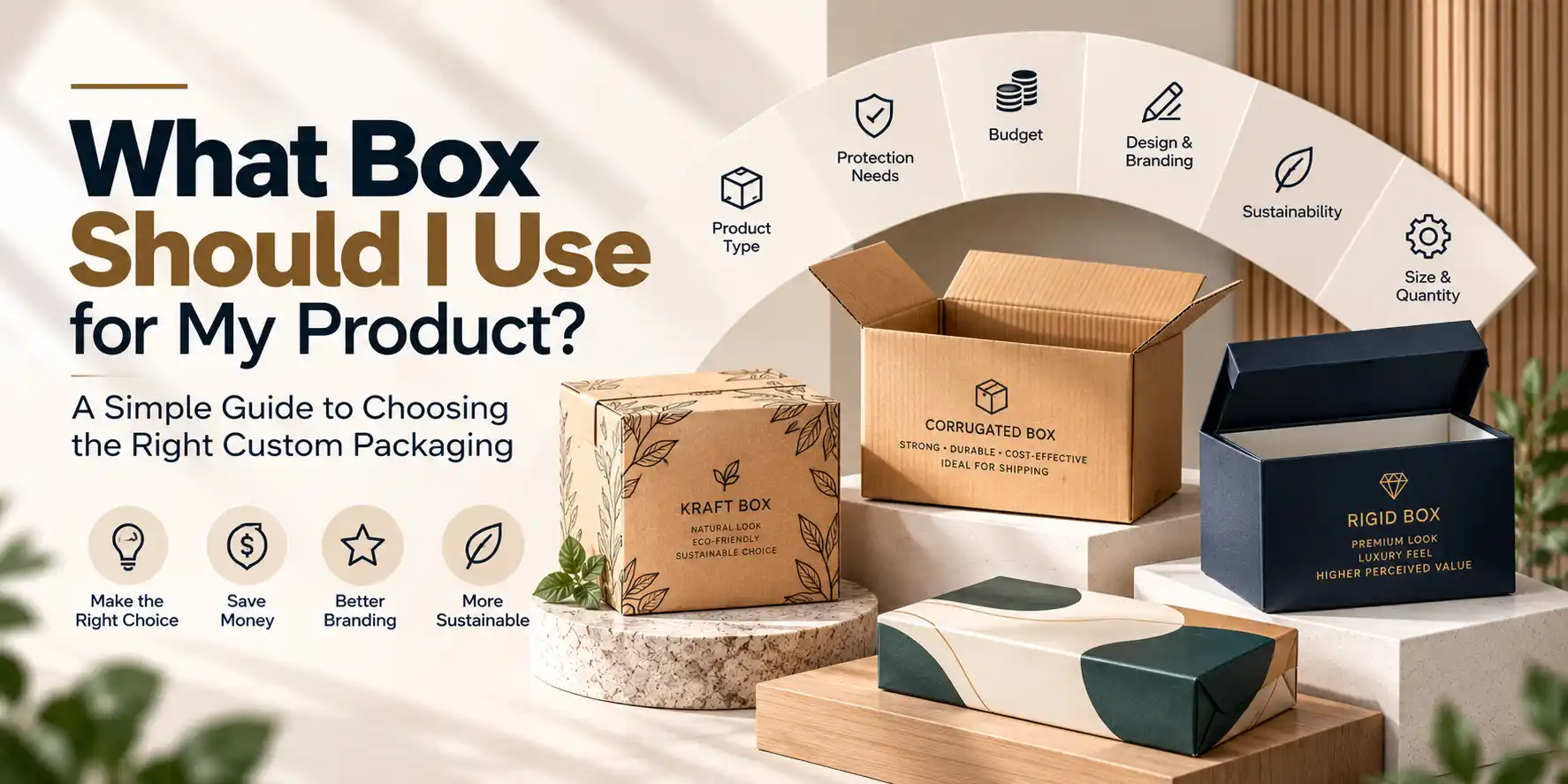
The right box depends on four things: how heavy your product is, how fragile it is, how it will be shipped or sold, and what impression you want the customer to get when they open it. Most products fit one of four box families: mailer boxes, corrugated shipping boxes, rigid boxes, and folding cartons.
Most owners pick a box by looking at pictures. Then the first order arrives crushed, the product rattles inside, or the box looks cheaper than the product. This guide gives you a simple way to choose before you spend money on a print run.
Key Takeaways
- Start with your product, not the box. Weight, fragility, and shipping method narrow your options faster than style does.
- Use mailer or corrugated boxes for products that ship. Use rigid boxes or folding cartons for products that sit on a shelf or serve as gifts.
- Size comes before printing. A box that is too big wastes money on shipping and lets the product move. A box that is too tight damages it.
- Order samples or a prototype before you commit to a full run.
- Packaging affects whether customers come back. Keep the unboxing consistent with your brand.
What Box Should I Use? The Quick Answer
Find your product type in the table below. Then read the sections that follow to confirm the choice.
| Your product | Best box style | Why it works |
|---|---|---|
| Apparel, soft goods, light accessories | Mailer box | Ships flat, assembles fast, looks branded |
| Skincare, candles, cosmetics | Mailer box with insert, or folding carton | Holds shape, protects glass and bottles |
| Heavy or bulky items | Corrugated shipping box | Strongest structure for transit |
| Premium gifts, jewelry, electronics | Rigid box | Feels high-end, holds its shape |
| Retail shelf products (supplements, food, small goods) | Folding carton | Prints well on all sides, low cost per unit |
| Subscription kits | Mailer box with custom insert | Organizes multiple items, strong unboxing |
| Fragile items (glass, ceramics) | Corrugated box with insert or double-wall | Absorbs impact |
Step 1: Define What You’re Packing
Write down four facts before you look at any box style:
- Dimensions: length, width, and height in your preferred unit.
- Weight: the packed weight, not only the product alone.
- Fragility: will it survive a drop from a table onto a hard floor?
- Sensitivity: does it react to moisture, heat, or crushing?
These four facts eliminate many options right away. A 2 kg ceramic set cannot go in a light folding carton. A folded t-shirt does not need a double-wall corrugated box.
Step 2: Decide How It Will Reach the Customer
Ask where the product spends most of its time before the customer opens it.
Shipped directly to customers. You need a box that handles sorting machines, stacking, and rough handling. Choose a mailer box or a corrugated shipping box.
Sold in a store. Shelf appeal matters more than transit strength. Choose a folding carton or rigid box. The box should look good on a shelf and still survive being moved between warehouse and store.
Both. Many brands ship their retail box inside a plain outer shipper. This protects the branded box and keeps print finishes clean on arrival. It costs a bit more, but it avoids scuffed or dented customer-facing packaging.
Step 3: Match the Box Style to the Product
Mailer Boxes
A mailer box is a one-piece, self-locking box that ships flat and folds into shape. It suits lightweight to medium-weight products, and it prints well inside and out. It is a common choice for e-commerce brands that want branding without a rigid-box budget.
Good for: apparel, beauty products, small electronics, subscription items.
Avoid for: very heavy items or products with sharp edges that can puncture the board.
Corrugated Shipping Boxes
Corrugated board has a fluted layer between two flat sheets. That structure gives it strength against crushing and impact. Single-wall works for most products. Double-wall suits heavier or more fragile goods.
Good for: heavy products, fragile items, bulk shipments.
Avoid for: products where a premium look is the main goal, unless you add custom printing and inserts.
Rigid Boxes
Rigid boxes (also called setup boxes) use thick paperboard wrapped in printed paper. They do not fold flat, so they take more storage and shipping space. In return they feel substantial and expensive.
Good for: jewelry, premium cosmetics, gift sets, luxury electronics, corporate gifts.
Avoid for: low-margin products where packaging cost would be a large share of the price.
Folding Cartons
Folding cartons are printed paperboard boxes that ship flat and are folded and filled at the packing stage. They offer large print areas on every panel and low per-unit cost at volume.
Good for: retail products, supplements, food items, small consumer goods.
Avoid for: direct shipping without an outer carton, since paperboard alone gives limited impact protection.
Step 4: Choose the Right Material and Strength
Material choice affects protection, print quality, cost, and sustainability. Here is how to think about each one:
- Kraft paperboard: natural brown look, widely recyclable, good for eco-focused brands.
- White (SBS) paperboard: bright surface, best for sharp color printing.
- Corrugated board: choose the flute type based on your needs. Finer flutes print better. Thicker flutes protect better.
- Rigid greyboard with wrap: premium structure with a wide choice of paper finishes.
For shipped goods, ask your supplier about board strength ratings for your weight. A strong box is one that matches your product weight and shipping route, not simply the thickest board available.
Step 5: Get the Size Right
Size is the most common packaging mistake. It is also one of the easiest to fix.
Too large: the product slides around, you pay more to ship empty space, and you need extra void fill. Customers also notice and often read it as wasteful.
Too small: the product presses against the walls, corners crush, and the box may bulge or split.
How to measure:
- Measure your product at its longest, widest, and tallest points.
- Add room for inserts or protective material on each side.
- Use internal dimensions when ordering, not external.
- Order a plain white sample or prototype to test fit before printing.
A well-sized box with a fitted insert often protects better than an oversized box filled with loose material. Inserts can be paperboard, molded pulp, or foam depending on weight and fragility.
Step 6: Plan the Unboxing and Brand Impression
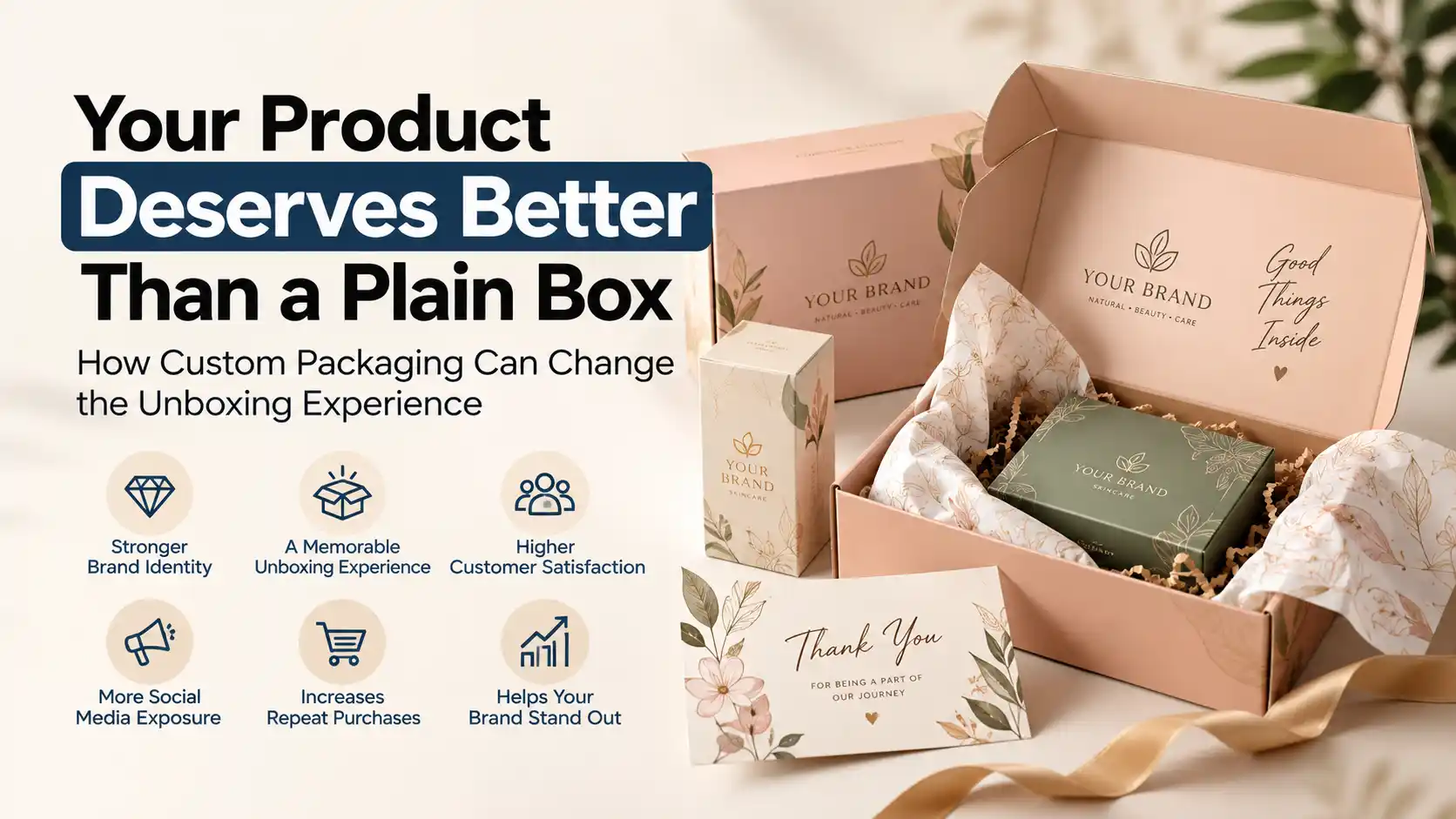
Packaging is the first physical thing many customers touch. Ryder’s 2025 e-commerce consumer study, which surveyed 1,376 U.S. online shoppers, found that 47% named a future-purchase coupon or credit as the unboxing factor most likely to bring them back, ahead of free samples at 24% and sustainable packaging at 16% (Packaging Dive, 2025). In practice, a great box matters, but a well-placed thank-you card with a returning-customer offer can matter just as much.
Practical ways to improve the unboxing without raising cost sharply:
- Print inside the lid with a simple message or pattern.
- Use one brand color consistently across box, insert, and tissue.
- Add a small insert card with care instructions or a reorder offer.
- Keep the opening easy. Hard-to-open packaging frustrates customers.
Focus on one or two touches that suit your brand rather than adding everything.
Step 7: Check Your Budget and Order Quantity
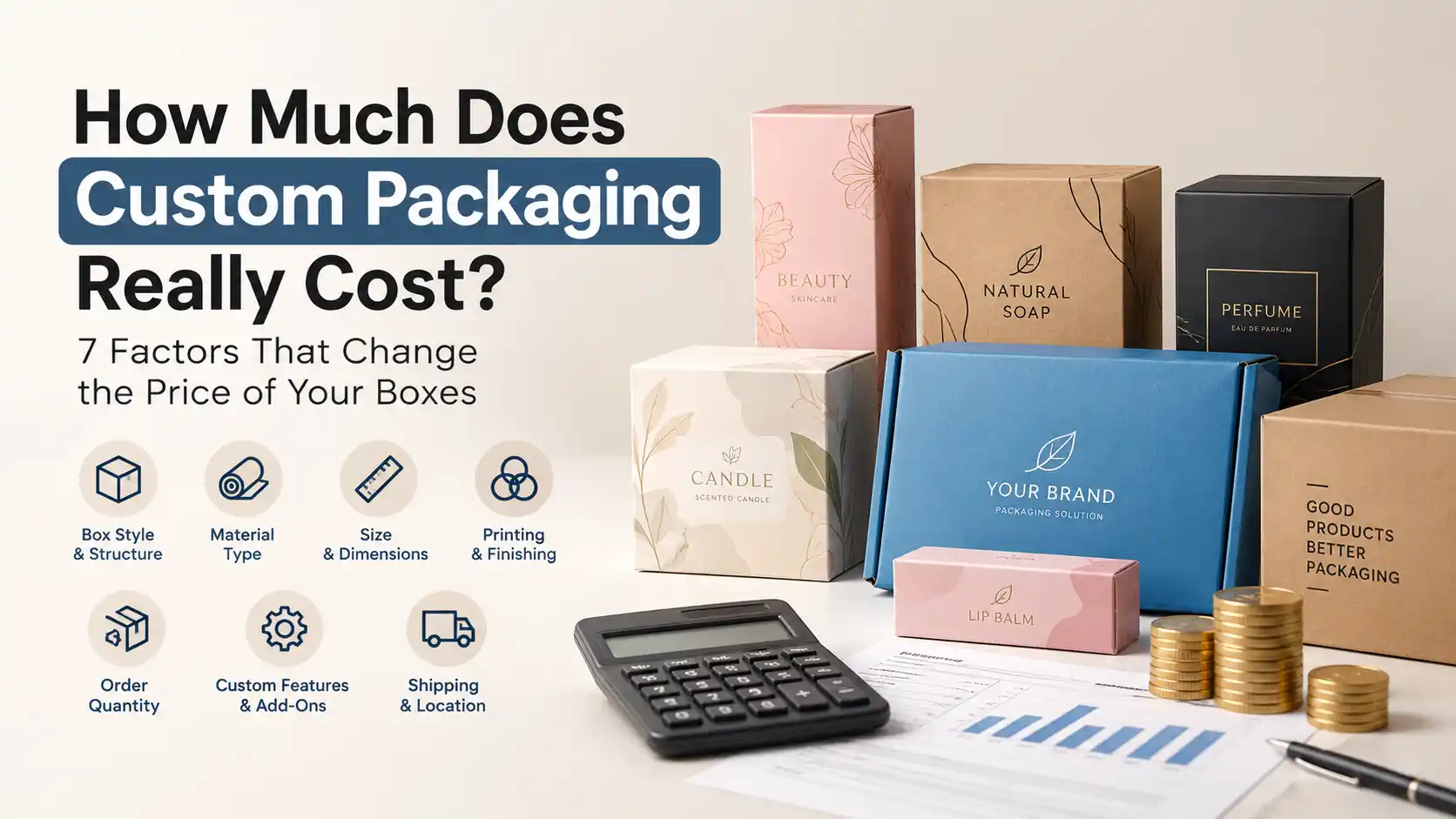
Custom packaging pricing depends on box style, size, material, print method, finishes, and quantity. Higher quantities usually lower the cost per unit. But ordering too many before you have tested the design can leave you with stock you cannot use.
A sensible path for newer brands:
- Start with a sample or small run to test fit, strength, and look.
- Fix any issues with size, insert, or artwork.
- Move to a larger run once the design works.
Ask your supplier about minimum order quantities, lead times, and whether print-ready file support is included. Clear artwork files prevent delays and reprints.
Common Mistakes When Choosing a Box
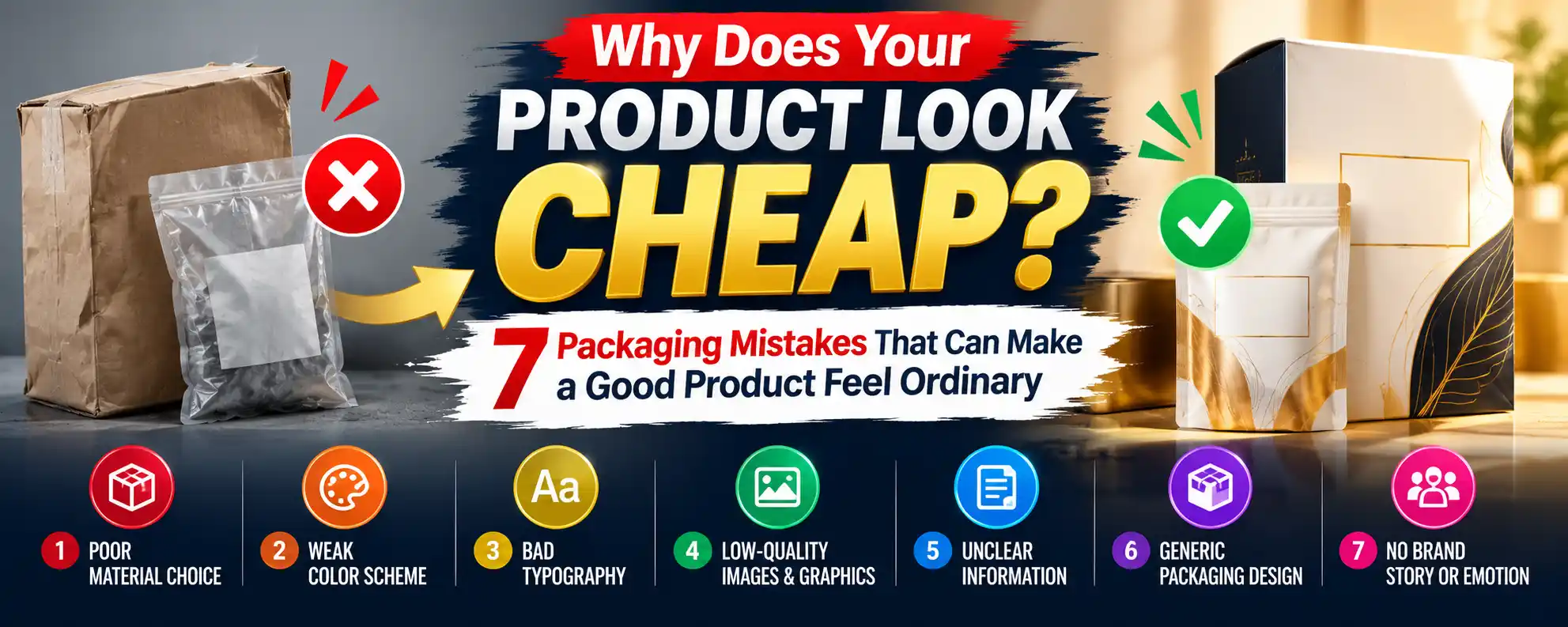
- Choosing by looks only. A beautiful box that crushes in transit costs more than a simpler box that arrives intact.
- Skipping samples. Screen mockups do not show real fit, texture, or color.
- Ignoring shipping weight. Heavy packaging raises shipping cost on every order.
- Over-designing for a first run. Too many finishes raise cost before you know what customers respond to.
- Forgetting storage. Rigid boxes arrive assembled and take real space. Mailers and cartons ship flat.
- Sending artwork in the wrong format. Use a dieline template from your supplier and keep text inside safe margins.
Quick Checklist Before You Order
- Product dimensions and packed weight recorded
- Shipping method or retail use decided
- Box style matches product type
- Material suits the weight and brand
- Internal size confirmed with a sample
- Insert planned for fragile or loose items
- Artwork built on the supplier’s dieline
- Budget and minimum quantity confirmed
Frequently Asked Questions
What is the best box for shipping a product?
For most shipped products, a mailer box or a corrugated shipping box is the best choice. Mailers suit light to medium items and give you branding space. Corrugated boxes suit heavier or more fragile items. Add an insert whenever the product can move inside.
How do I know what size box I need?
Measure your product’s length, width, and height, then add room for any insert or padding. Order using internal dimensions. Test with a sample box before you print a full run.
What is the difference between a rigid box and a folding carton?
A rigid box is made from thick paperboard, arrives fully assembled, and feels premium. A folding carton is thinner paperboard that ships flat and is assembled at packing. Rigid boxes cost more and suit gifts and luxury goods. Folding cartons cost less and suit retail products.
Do I need custom packaging or can I use stock boxes?
Stock boxes work for early-stage testing or low volumes. Custom boxes give you an exact fit, your branding, and a more consistent customer experience. Many brands start with stock and move to custom once orders are steady.
What box is best for fragile products?
Use a corrugated box, often double-wall for heavier items, with a fitted insert that stops movement. The insert matters as much as the outer box.
Is custom packaging worth it for a small business?
It can be, especially when packaging is part of what customers pay for. Start with a small run, measure customer feedback and damage rates, then scale. Packaging that protects the product and matches your brand supports repeat orders.
[INTERNAL-LINK: how to order custom packaging step by step → ordering process page]
Conclusion
Choosing a box becomes simple when you work in order: product facts, delivery method, box style, material, size, brand touches, and budget.
- Match the box family to how your product ships or sells.
- Get the internal size right and test it with a sample.
- Add an insert when the product can move.
- Start small, then scale.
Not sure which box fits your product? Send us your product’s dimensions, weight, and how you sell it. We’ll recommend a box style, size, and material, and prepare print-ready artwork for you.
