 Skip to content





Before You Order Custom Boxes?
Most expensive packaging mistakes happen before production starts. A box that’s half an inch too small, artwork in the wrong color mode, or a quantity that doesn’t match demand can cost more than the order itself.
The good news is that nearly all of these mistakes can be avoided with a few answers in hand before you request a quote. Work through these nine questions and you’ll order faster, get more accurate pricing, and avoid reprints.
Key Takeaways
- Know your product’s exact dimensions, weight, and fragility before choosing a box.
- Decide how the box will travel (courier, retail shelf, or gifting) because it shapes the material and structure.
- Your quantity, print method, and finishes drive the price more than most buyers expect.
- Order a sample or proof before a full run.
- Print-ready artwork and realistic timelines prevent the most common (and costly) delays.
1. What Are the Exact Dimensions of Your Product?
Everything starts here. Measure length, width, and height of the product in its final state, including any wrapping, bottle caps, pumps, or protrusions.
Box dimensions are normally listed as length × width × height, measured on the inside. Mixing up inside and outside measurements, or the order of the dimensions, is one of the most common reasons boxes arrive the wrong size.
Quick checks:
- Measure the real product, not the spec sheet
- Add space for inserts, tissue, or cushioning if you’re using them
- Keep consistent order: length, width, height
- Confirm with your supplier whether they use inside or outside dimensions
2. How Will the Box Reach the Customer?
A box that sits on a retail shelf has different needs from one that travels in a courier van.
- Courier shipping: needs strength. Corrugated is the usual choice.
- Retail shelf: appearance matters more, so folding cartons or rigid boxes often fit.
- Gifting or influencer kits: presentation comes first, and rigid boxes are common.
- Hand delivery or local pickup: you have more freedom to choose on looks and budget.
If you’re unsure, the shipping route usually settles the material question. If you haven’t compared the options yet.
3. How Heavy and Fragile Is the Product?
Weight and fragility decide how much protection the box needs.
- Light and sturdy: a simple folding carton may be enough
- Heavy: needs a stronger board or a thicker flute
- Fragile (glass, ceramics, candles, electronics): needs structure plus a fitted insert
A box that looks right but fails in transit costs you replacements, refunds, and customer trust. Spending slightly more on the right structure is often cheaper than absorbing damage.
4. What Material and Structure Suit Your Product and Brand?
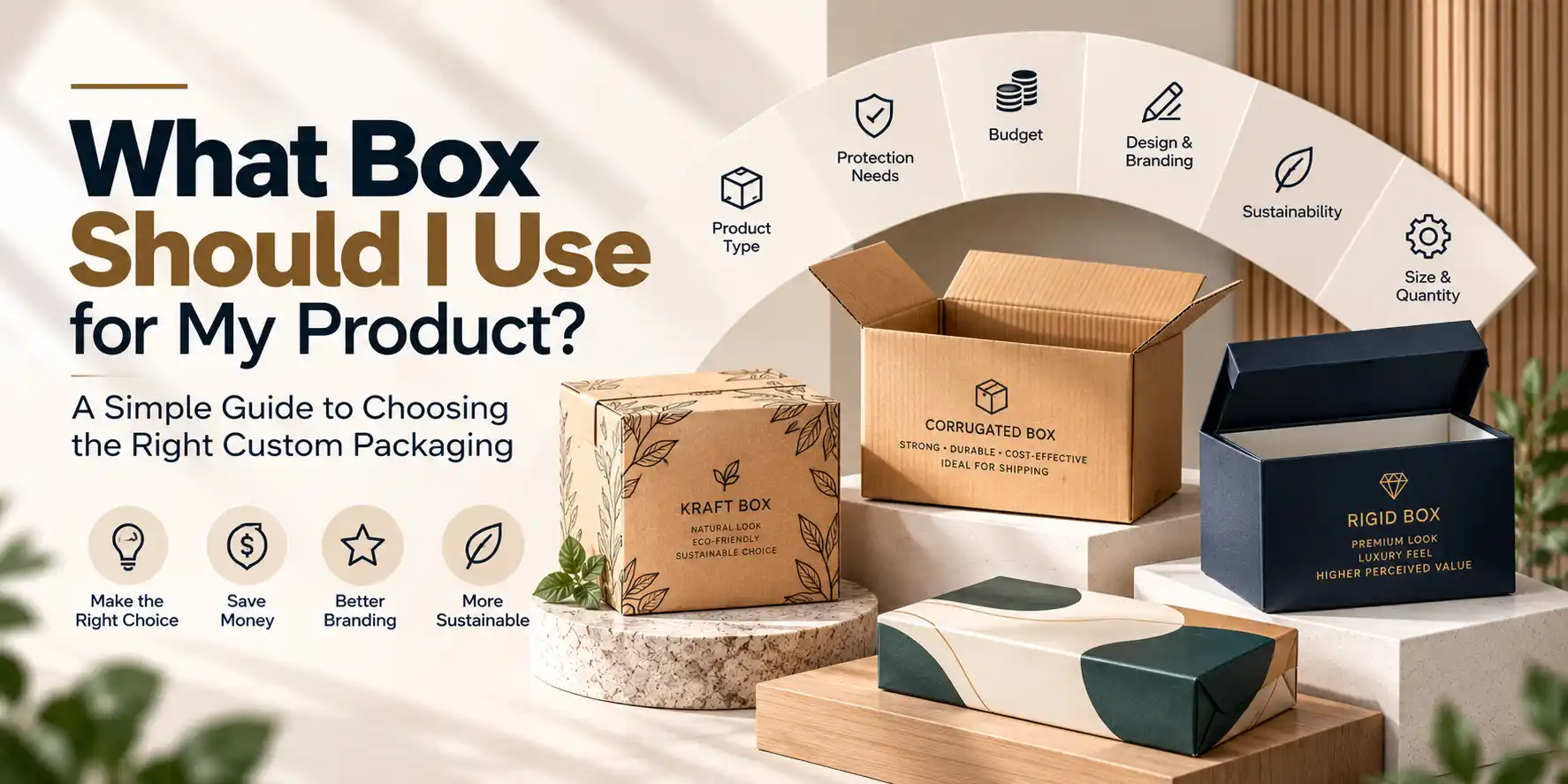
Once you know the product and the route, choose the material:
- Kraft: natural look, lightweight, good for eco-minded brands
- Corrugated: protective, ideal for shipping
- Rigid: premium feel, suited to gifting and luxury
You can also combine them, such as a rigid box inside a corrugated shipper. Pick the combination that matches both your product’s needs and what your brand should feel like.
5. How Many Boxes Do You Actually Need?
Quantity has a large effect on the cost per box. In general, larger runs bring the unit price down, while small runs cost more per box but reduce your risk.
Think through three things:
- Realistic demand: how many orders do you expect in the next two to three months?
- Storage space: can you store the boxes? Rigid boxes in particular take up room.
- Design risk: if you’re testing a new design, a smaller first run may be safer than a big one.
Don’t order a large quantity just to chase the lowest unit price if you may change the design soon. Leftover boxes are wasted money.
6. What Printing Method and Finish Do You Want?
Printing and finishing choices affect both the look and the price.
Print options (common):
- One- or two-color logo printing is usually the most economical
- Full-color printing allows photos, gradients, and detailed artwork
Finishes (common):
- Matte or gloss lamination
- Soft-touch coating
- Foil stamping
- Embossing or debossing
- Spot UV
Each extra finish adds cost and sometimes production time. A strong approach is to choose one standout feature, such as a bold interior print or a single foil logo, instead of stacking every option.
Also keep in mind that heavy lamination can affect recyclability. If sustainability matters to your brand, ask about recyclable coatings and inks.
7. Is Your Artwork Print-Ready?
This is where many first-time buyers lose time and money. Print-ready artwork usually means:
- Correct dieline: the flat template of your box, supplied by your manufacturer
- Bleed: extra artwork beyond the cut line so no white edges appear
- Safe zone: key text and logos kept away from fold and cut lines
- CMYK color mode: designs made in RGB can print with different colors
- High resolution: images at 300 dpi at final size
- Outlined fonts or embedded fonts: so text doesn’t change
- Vector logo: so it stays sharp at any size
Ask your supplier for the exact dieline for your box before you start designing. Designing first and fitting later often means rework.
8. Have You Seen a Sample or Proof?
Screens don’t show how a box feels or exactly what its colors look like in print. Before a full production run, ask for:
- A digital proof: to check layout, text, and placement
- A physical sample or prototype: to check size, fit, material, and color
A sample may add a little time and cost, but it can prevent a much larger problem. It’s cheaper to fix a sample than to reprint a full order.
When you receive a sample, check the product fit, how the box closes, how it feels when opened, and whether the colors match your brand.
9. What Is Your Real Timeline and Total Budget?
Custom packaging takes time. Design, proofing, production, finishing, and shipping all add up, and rigid boxes or special finishes usually take longer than simple printed mailers.
Plan for:
- Time to finalize artwork and approve proofs
- Production time, which varies by box type and quantity
- Shipping time to your location
- A buffer for revisions or delays, especially before busy seasons or product launches
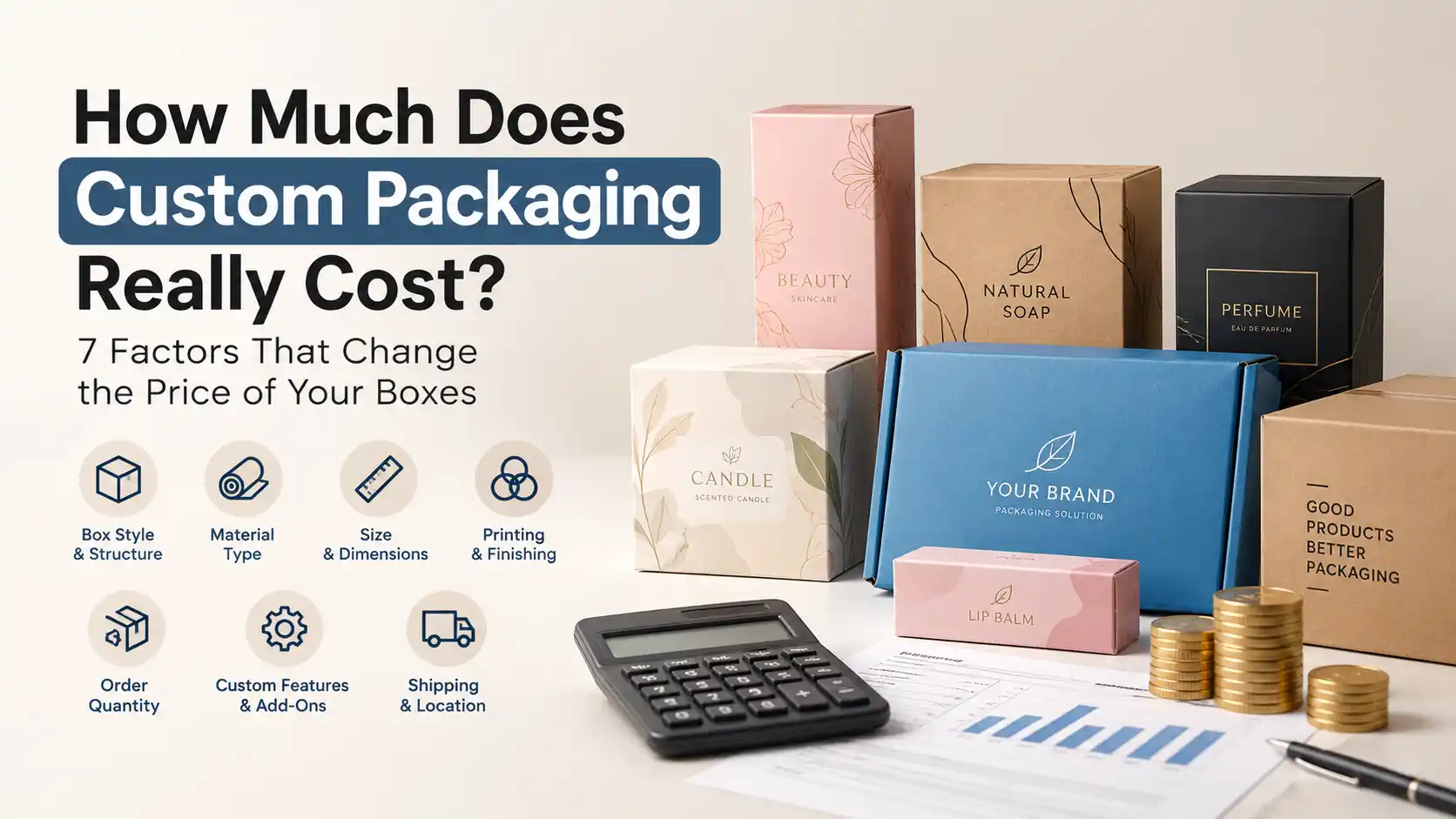
Budget for the whole picture, not only the unit price:
- Box cost per unit
- Inserts, tissue, stickers, or cards
- Samples and proofs
- Shipping and import costs, if applicable
- Storage
- Your shipping weight, since heavier boxes can raise courier costs
Ask for a quote that spells out what’s included, so you can compare suppliers fairly.
Quick Pre-Order Checklist
Before you request a quote, make sure you can answer these:
- Product dimensions (length × width × height) measured
- Product weight and fragility known
- Shipping or display route decided
- Material and structure chosen
- Quantity decided, with storage planned
- Print method and finishes chosen
- Artwork prepared on the correct dieline
- Sample or proof requested
- Timeline and total budget set
Having these answers ready usually makes quotes faster and more accurate, because your supplier doesn’t have to guess.
Common Mistakes That Cost Money
- Guessing the size. Wrong dimensions mean reordering.
- Choosing the cheapest option without checking protection. Damage costs more than a better box.
- Over-ordering a design you might change. Leftover stock is wasted spend.
- Stacking too many finishes. Each one adds cost, and not all of them improve the result.
- Skipping the sample. Surprises are expensive at full-run scale.
- Sending artwork in the wrong format. Delays and reprints follow.
- Ignoring total landed cost. Unit price alone doesn’t show the full picture.
Frequently Asked Questions
How do I get an accurate quote for custom boxes?
Provide product dimensions, box style, material, quantity, print method, and finishes. The more precise you are, the more accurate the quote.
Should I order a sample first?
In most cases, yes. A sample lets you check size, fit, material, and color before committing to a full run, which can prevent costly mistakes.
What file format do suppliers usually need?
Most suppliers want a vector file, often PDF or AI, built on their dieline, in CMYK, with bleed and outlined fonts. Ask your supplier for their exact requirements.
Can I order a small quantity?
Many suppliers offer low-minimum options, though the cost per box is usually higher at small volumes. Ask what’s available for your box style.
How can I lower the cost of custom boxes?
Simplify the print, limit the finishes, choose standard sizes where possible, and order a quantity that matches real demand. Right-sizing the box can also reduce material and shipping costs.
How long does custom packaging take?
It varies by box type, quantity, finishes, and your approval speed. Ask your supplier for a timeline that covers proofing, production, and shipping, and add a buffer for busy periods.
Get It Right the First Time
A little preparation saves a lot of money. When you know your dimensions, route, material, quantity, finish, artwork, and timeline, you can order custom boxes with confidence and avoid the reprints that eat into your margins.
Packaging Island produces custom boxes with print-ready artwork support, so you’re not guessing alone.
